Sunday, 1 April 2018

New superchip to make PCs 100 times faster
New superchip to make PCs 100 times faster


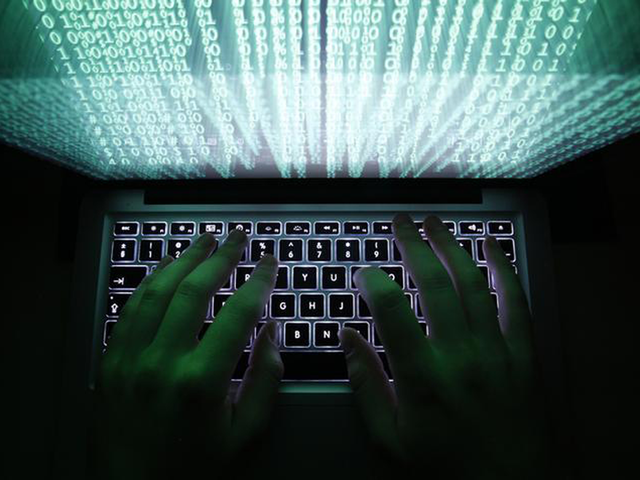
Representative image (Reuters)

Researchers have developed a technology that could enable our computers — and all optic communication devices — to run 100 times faster through terahertz microchips.

“This discovery could help fill the ‘THz gap’ and create new and more powerful wireless devices that could transmit data at significantly higher speeds than currently possible,” said one of the researchers Uriel Levy from Hebrew University of Jerusalem (HU) in Israel.

“In the world of hi-tech advances, this is game-changing technology,” Levy added.

Until now, two major challenges stood in the way of creating the terahertz microchip — overheating and scalability.

However, in a paper published in the journal Laser and Photonics Review, the researchers showed proof of concept for an optic technology that integrates the speed of optic (light) communications with the reliability — and manufacturing scalability — of electronics.


Optic communications encompass all technologies that use light and transmit through fibre optic cables, such as the internet, email, text messages, phone calls, the cloud and data centres, among others.


Optic communications are super fast but in microchips they become unreliable and difficult to replicate in large quantities.


Now, by using a Metal-Oxide-Nitride-Oxide-Silicon (MONOS) structure, Levy and his team have come up with a new integrated circuit that uses flash memory technology — the kind used in flash drives and discs-on-key — in microchips.


If successful, this technology will enable standard 8-16 gigahertz computers to run 100 times faster and will bring all optic devices closer to the holy grail of communications — the terahertz chip, the study said.

Your WhatsApp friends may be spying on you with this app

Your WhatsApp friends may be spying on you with this app

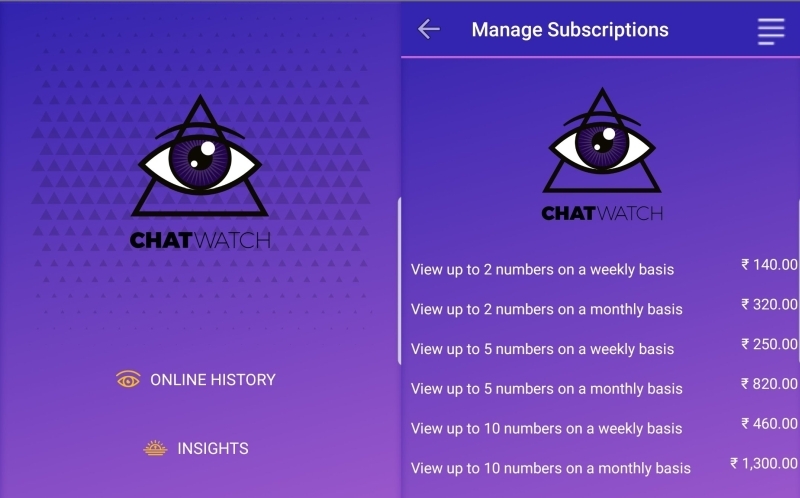
Chatwatch app
Chatwatch app

NEW DELHI: WhatsApphas over a billion users on its platform sharing information through texts, images, videos and other content. To make it more private, the company has brought options such as the ‘Last seen’ feature and more. This prevents others from pinging you continuously and gives you a breather from the app.

But Lifehacker recently found a new app that can let your WhatsApp friends spy on you even with all the security features in place. The app called Chatwatch, as the name indicates, watches when you are online on the messaging platform and gives others an insight.


It has been mentioned that the app, which is available for iOS and Android, uses WhatsApp’s public online and offline status feature to let others know when they check WhatsApp every day and even finds out if the two WhatsApp contacts (given by you) chat with each other or not.


“Use Chatwatch to monitor your friends, family or employees' Whatsapp online/offline activity. Even when their "Last Seen" is hidden,” says the company website. “Find out when they went to bed, how long they slept… Even compare chat patterns between people you know, and we will tell you the probability of them talking to each other during the day, using Artificial Intelligence. Yep, we made it happen,” adds the site.


As mentioned by The Next Web, the app takes up to 24 hours before it starts showing results. Although you would have to pay $2 (Rs 140 on Android in India) if only the app was still there on Apple App Store. Yes, the company has removed the app from the company’s app market. Chatwatch is unaware why this happened. “For reasons unknown to us, Apple has suspended our app from the app store. We are working on a web version to launch tomorrow the latest, and appealing the decision with Apple,” states the company’s website.


However, it is still available to download for Android users.

Investor Elliott Management buys stake in Wipro


Investor Elliott Management buys stake in Wipro


 Elliott Management disclosed in 2016 that it had a more than 4% stake in Cognizant and asked it to begin paying dividends, institute buybacks and shakeup its board.
Elliott Management disclosed in 2016 that it had a more than 4% stake in Cognizant and asked it to begin payi... Read More


BENGALURU: Elliott Management, the activist hedge fund that changed Cognizant’s business strategy, has taken a tiny stake in Wipro, highlighting its interest in Indian IT companies. Of about 40 US-listed stocks that the $34-billion hedge fund owns, two are now from the Indian IT sector.

The hedge fund’s stake in Wipro is unlikely to be part of an activist strategy as with Cognizant.
Cognizant complied with those requests, beginning a $3.4-billion capital return programme and replacing three members of the board. The fund, most recently, pushed for the shakeup of oil majors Hess and BHP Billiton.

Elliott Management bought 1.85 million of Wipro’s American Depositary Receipts (ADRs) in the December quarter, 0.04% of its outstanding shares, filings with the US Securities & Exchange Commission (SEC) show. Elliott Management declined to comment on questions related to its Wipro stake. Wipro declined to comment.

The Paul Singer-backed Elliott Management is far from being the largest hedge fund investor in Wipro’s ADRs. In the December quarter, hedge fund AQR Capital Management cut its holding in Wipro from over 13.6-million shares to over 9.6-million shares, while Renaissance Technologies raised its holdings in Wipro to over 1.8-million shares from about 1.1-million shares.

Hedge funds typically have investment positions and hedge positions. Investment positions are usually larger, allowing the activist investor to take the fight to a proxy battle for board seats should the target company not comply with his demands.


Wipro founder Azim Premji owns 73% of the company, making any board fight a futile exercise. Following Elliott Management’s shakeup of Cognizant, a slew of Indian IT companies including Tata Consultancy Services and Infosysannounced large share buybacks with a combined value of Rs 29,000 crore. Wipro announced its second share buyback in as many years. Infosyswarned in its 2017 annual filing with the US SEC about the potential for activist investors to disrupt its working.


IT experts said the unprecedented disruption that the industry is going through makes it an attractive target and that there are three ways in which an activist could ask companies to improve shareholder value — by increasing margins as a result of cutting investment, overheads and sales costs; consolidation or accelerating the move to the digital model. “Option 1is by far the less risky and that is why it is favoured by the activist investors. Interestingly, the private equity community is increasingly interested in the industry and has already started to take positions in firms as well as taking them private. At this time the PE industry seems to be favouring options 2 and 3 and in some cases looking to combine them,” said Peter Bendor-Samuel, founder of Everest Research, an IT consultancy.


He said that while IT companies have talked about moving to the digital model, there have mostly been incremental changes and few radical moves that could cannibalise existing business.

How to stop Facebook from recording your call and SMS data


How to stop Facebook from recording your call and SMS data


Facebook
Facebook


NEW DELHI: Facebook is having a not-so-good time since past few days as it has come under a barrage of criticism from several government authorities for sharing user data with a third-party consulting firm. Recently it was unearthed that the social media giant has also been gathering regular call and SMS data records from smartphones. We already have given steps on how you too can get to see what call and SMS data Facebook is gathering. But the social media firm, in a blog post, has detailed how it gathers this data.

The post says that it only captures this data whenever users give the permission. Call and text history logging is said to come as a part of an opt-in feature for those using Messenger or Facebook Lite on Android. It is also possible to turn off this feature by visiting the Messenger settings page for Messenger and Facebook Lite users.


“While we receive certain permissions from Android, uploading this information has always been opt-in only,” says the post.

Messenger users can visit the link -https://www.facebook.com/help/838237596230667 and delete all contact information from - https://www.facebook.com/mobile/messenger/contacts.Facebook Lite users can perform the same steps from -https://www.facebook.com/help/fblite/355489824655936.

While logging in to Messenger users get the option to ‘Learn More’ or ‘Not Now’ in addition to ‘Turn On’, while for Facebook Lite users option to turn it on or skip are there.


“If you chose to turn this feature on, we will begin to continuously log this information, which can be downloaded at any time using the Download Your Information tool,” adds the post.


The social media giant reconfirmed that it never sells these data and the feature does not collect the content of the SMS or calls.


You can however, check what all data of yours has Facebook captured until now. All you need to do is to download the .zip file. The steps are simple and can befound here. The document also shows what all advertisers are using your Facebook contact information.


11 times Facebook made 'promises' over privacy

11 times Facebook made 'promises' over privacy

AP | Mar 31, 2018, 10.31AM IST

11 times Facebook made 'promises' over privacy

MENLO PARK: "We've made a bunch of mistakes." ''Everyone needs complete control over who they share with at all times." ''Not one day goes by when I don't think about what it means for us to be the stewards of this community and their trust."

Sound familiar? It's FacebookCEO Mark Zuckerberg addressing a major privacy breach - seven years ago .

Lawmakers in many countries may be focused on Cambridge Analytica's alleged improper use of Facebook data, but the social network's privacy problems go back more than a decade. Here are some of the company's most notable missteps and promises around privacy.

2007

The social media darling unveils its Facebook Platform to great fanfare. Zuckerberg says app developers can now access the web of connections between users and their friends, a set of connections Facebook calls the "social graph."

"The social graph is changing the way the world works," he says .

That November, Facebook launches Beacon , which shares what users are doing on other websites with their Facebook friends. Many users find it intrusive and difficult to disable. Massachusetts resident Sean Lane buys his wife a diamond ring for Christmas on Overstock.com, but Facebook ruins the surprise , an incident leading to a class-action lawsuit.

In December, Zuckerberg apologizes and enables users to shut off Beacon. "I know we can do better," he says .

2008

Facebook launches Facebook Connect , aiming to correct Beacon's mistakes by requiring users to take deliberate action before they share activity from other websites when logged in using Facebook. More than 100 websites use the tool at launch, including CNN and TripAdvisor.

2009

Facebook announces "privacy improvements" after a yearlong review by Canada's Office of the Privacy Commissioner found that it geared its default privacy settings toward openness, failed to inform users their data would be used to serve ads, and leaked data to third party developers, including when their friends used apps. Facebook vows to encourage "users to review their privacy settings" but does not agree to all the recommendations.

Beacon is officially shut down, settling Lane's class action lawsuit.

The American Civil Liberties Union warns people that Facebook's default settings mean that when a friend uses an app or takes a quiz, the quiz- or app-maker can peer into your profile, even if you've made it private.

2010

App-makers exhibit a sophisticated grasp of data they can scoop from Facebook's social graph.

The Wall Street Journal reports that many popular apps are transmitting personalized Facebook data to dozens of advertising and internet companies, among them, Zynga's breakout game FarmVille. Facebook responds by shutting down some apps.

Prior to the Journal report, Facebook says it has redesigned its privacy tools, giving its 400 million users "the power to control exactly who can see the information and content they share.

2011

The Federal Trade Commission reaches a consent decree with Facebook after an investigation of its broken privacy promises to consumers.

The FTC alleges, among other things, that:

-Facebook made its users' friend lists public in December 2009, even if they had been set to private, without telling them.

-Even if users limited data sharing to "friends only," data was actually shared with third party apps that friends used.

-Facebook failed to verify the security of apps it put on a "verified apps" list.

-Facebook promised not to share personal information with advertisers, but did.

Facebook promises to submit to a privacy audit every two years for the next 20 years, and Zuckerberg owns up to mistakes.

2012

Facebook introduces new methods to help advertisers reach people in ways "that protect your privacy," including an encryption tool called Custom Audiences that lets marketers match the email addresses of sales leads to the addresses that Facebook users used to set up their accounts.

Facebook also rolls out new privacy tools aimed at simplifying its convoluted and confusing privacy controls. Among other things, it narrows the scope of app permissions so they don't suck in as much user data automatically.

2013

Facebook shares two-year-old anonymized data on billions of friendships between countries with Cambridge researcher Aleksandr Kogan and co-authors a research paper with him (published in 2015).

Kogan creates a quiz app, installed by around 300,000 people , giving him access to tens of millions of their friends' data.

2014

Facebook says it dramatically limits the access apps have to friend data, preventing the type of data scoop Kogan and others were capable of. It also requires developers to get approval from Facebook before accessing sensitive data.

2015

Facebook says it learns from Guardian journalists that Kogan has shared data with Cambridge Analytica in violation of its policies. It bans the app and asks Kogan and Cambridge Analytica to certify they had deleted the data.

It rolls out "Security Checkup ," a new tool aimed at simplifying its convoluted and confusing privacy controls.

2017

Facebook introduces "Privacy Basics ," a Frequently Asked Questions site aimed at simplifying its privacy controls.

2018


Facebook says it learns from The Guardian and other media outlets that Cambridge Analytica did not delete improperly obtained Facebook data and suspends the company, Kogan, and whistleblower Christopher Wylie from its service.


Zuckerberg tells CNN that "I'm really sorry that this happened." He promises to audit app makers that gathered massive amounts of data prior to 2014 and to notify affected users. Amid calls for investigations in the U.S. and U.K., the FTC begins investigating whether Facebook broke its 2011 consent decree.


"Our responsibility now is to make sure that this doesn't happen again," Zuckerberg says.


Facebook redesigns its privacy settings menu on mobile devices and says in a blog post, "It's time to make our privacy tools easier to find."

Apple iOS 11.3 released: All the features detailed


Apple iOS 11.3 released: All the features detailed


Apple iOS 11.3 released: All the features detailed


NEW DELHI: After nearly three months of beta testing, Apple has finally rolled out iOS 11.3 to all the iPhone users (non-developers). The update, as expected brings onboard one of the much-required features – battery health and power management feature. This comes as a result of a massive backlash that Apple faced when it was found that every iOS update rearranges the processor’s performance level preventing it from consuming the same amount of power every time from the constantly draining battery. This was being done to keep the battery performance intact. Apple confirmed this and said it will be done in the latest smartphones as well in the future iOS versions.

Battery and power management feature
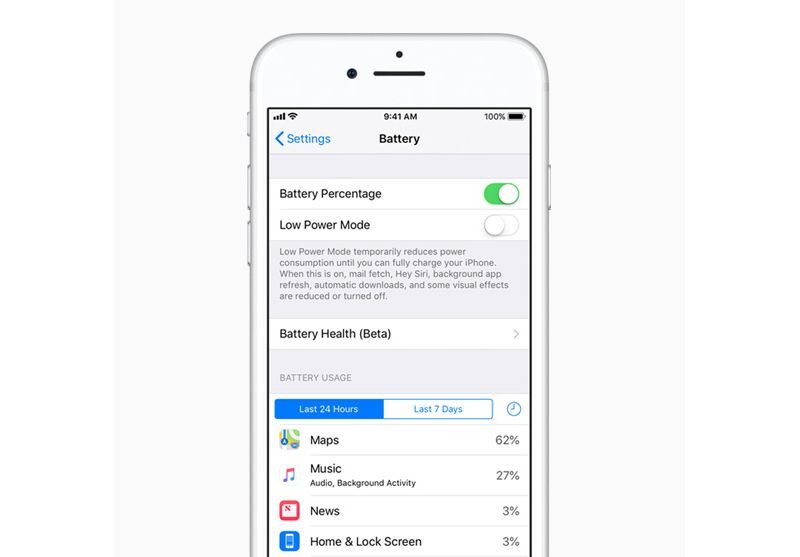
With iOS 11.3 users will be able to see when their handset’s dynamically manage the maximum performance so your handset doesn’t face unexpected shutdowns. This can also be switched off at will. You can find this feature inside Settings > Battery. This feature is for iPhone 6, iPhone 6 Plus, iPhone SE, iPhone 6s, iPhone 6s Plus, iPhone 7 and iPhone 7 Plus.
iOS 11.3 will also be notifying you if your iPhone’s battery needs to be serviced. This feature will be there inside Settings > Battery. In addition to the handsets mentioned above, this particular feature is there for iPhone 8, iPhone 8 Plus and iPhone X.

Data and privacy
In the wake of the massive outrage Facebook is facing for sharing user data with third-party consulting firm, Apple has made it easier for users to understand where their private data may be used. With iOS 11.3 and macOS 10.13.4, users will see a new privacy icon and detailed privacy information every time Apple asks them to access personal information to enable features, secure Apple services or personalize an iOS experience.

New Animojis
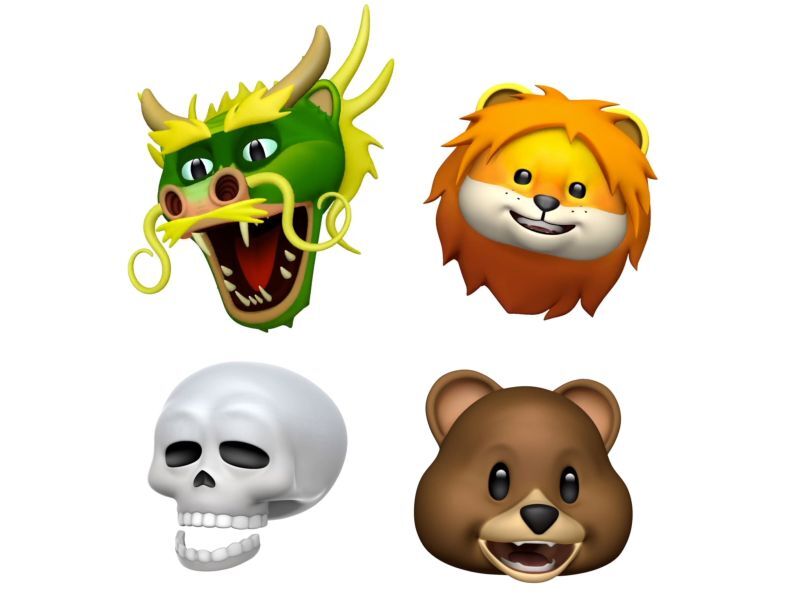
iPhone X users have four new Animojis to play with in iOS 11.3. These include the Lion, Bear, Dragon and Skull. These will mimic your face expressions and voice just like the Animojis that are already present for iPhone X users.

More focus on augmented reality
Apple has improved AR experience with iOS 11.3 as apps can now use vertical surfaces like walls and doors alongside horizontal surfaces like table and chairs. It can also said to map more accurately with irregular shaped surfaces such as round tables and more. The ARKit, which came with iOS 11 can also bring 2D images to life. “The view of the real world through the camera now has 50 percent greater resolution and supports autofocus for an even sharper perspective,” the company said in a press release.


New Health Records feature

This new feature in iOS 11.3 lets patients from over 40 health systems view their medical records from multiple institutions. This feature is limited to US for now. The data includes viewing of lab results, medications, conditions and more. Keeping security in mind Apple has made this data password protected.


Business Chat beta hits US and Canada

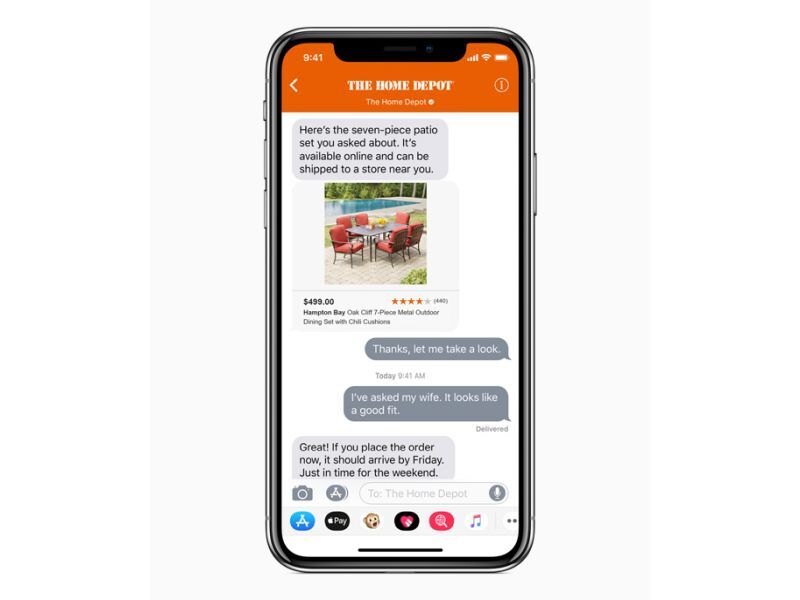
Apple is also launching Business Chat messaging feature in beta. It aims to offer users a ‘new way to connect’ to businesses. When users are searching for a hotel, bank or other business in Spotlight, they will get the option to directly get in touch with them using the Messages app via iPhone and iPad.


Other updates


Apple iOS 11.3 brings some minor updates to Apple Music, News, Pay and Apple TV App. Users in Brazil get Siri support on Apple TV 4K and Apple TV (4th generation). It also bring support for Advanced Mobile Location (AML), which automatically sends user location when making calls to emergency services.

New superchip to make PCs 100 times faster

New superchip to make PCs 100 times faster Representative image (Reuters) Researchers have developed a technology that could en...